

05.05.2021
How to choose between drywall and self-drilling screw, pick the correct dry construction tape and choose a system solution for dividing your living room in two
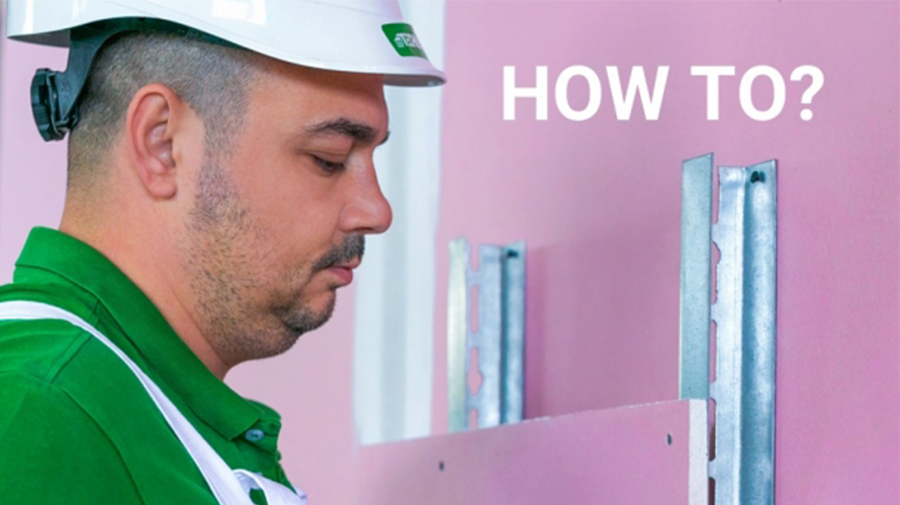
Today we provide more information on the following subjects: what is the difference between a drywall screw and self-drilling screw, what type of dry construction tape to use for reinforcing a hole in the wall and what is the most suitable system solution for dividing a large living room into two rooms.
Question 1: What is the difference between drywall and self-drilling screw?
Answer: The drywall screw is a screw with a sharp point designed for fixing plasterboard to metal profiles with metal thickness up to 0.7 mm. The Self-drilling screw is a bugle head drywall screw designed for fixing plasterboard to metal profiles with metal thickness up to 2.0 mm.
Unless there are specific requirements for the project, we recommend the use of drywall screws with Premium profiles CW, UW, CD and UD, and self-drilling screws with reinforced profiles UA.
Question 2: I have a hole in the wall that I want to fill and reinforce. What type of dry construction tape should I use?
Answer: We recommend smoothing the edges of the hole and filling it with joint filler or construction gypsum. For better reinforcement and for optimal wall strength, we recommend applying self-adhesive joint tape over the hole, and reapplying the joint filler or construction gypsum on top before proceeding to the complete skim coating of the wall.
Question 3: I want to divide a large living room into two separate rooms – a smaller living room and a children’s room. What system solution should I choose?
Answer: When dividing a single room into two, especially when one of them is going to be a children's room, sound insulation is one of the most important factors in choosing a system solution. For excellent acoustic comfort, we recommend the construction of a two-layer partition wall W1-2 with plasterboard Sound Comfort Extra Type DF. With this system solution, even with a standard wall thickness of 125 mm, you will achieve up to 61 dB of sound insulation, and you will also guarantee 120 minutes of fire evacuation time.
We thank those of you who took time to write to us. We are excited to receive your new questions in our channels on social networks @technogipspro!